
Knee replacement surgery can provide significant relief for people living with severe knee arthritis, chronic pain, stiffness, and difficulty walking. One of the most common questions patients ask before surgery is: “How long will my knee replacement last?”
Modern knee replacement implants are designed to provide long-term pain relief and restore function. Many implants can function well for 15 to 20 years or longer, although their actual lifespan varies from one person to another.
The longevity of a knee replacement depends on several factors, including the patient's age, weight, activity level, implant design, surgical technique, bone quality, overall health, and how much stress is placed on the artificial joint over time.
A knee replacement does not necessarily need to be replaced after a fixed number of years. Some patients continue to have a well-functioning implant for much longer than 20 years.
Understanding what affects implant longevity, which activities are appropriate after surgery, and what warning signs to watch for can help patients protect their knee replacement and seek medical attention when necessary.
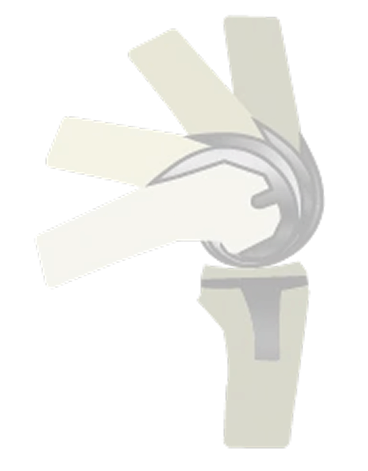
During total knee replacement surgery, damaged surfaces of the knee joint are removed and replaced with artificial components.
A typical knee replacement includes components that replace the damaged surfaces of the thigh bone and shin bone, along with a plastic spacer that allows the artificial surfaces to move smoothly against each other. In some patients, the back surface of the kneecap may also be resurfaced.
The materials and design of modern implants have improved considerably over the years. Advances in implant design, polyethylene materials, surgical techniques, and computer-assisted or robotic technology have helped surgeons achieve accurate positioning and alignment in appropriately selected patients.
However, an implant is still a mechanical device and can gradually wear or develop other problems over time.
Many modern knee replacements can last 15 to 20 years or longer.
Long-term studies have shown that a substantial proportion of knee replacements continue functioning well for 20 years and beyond. However, longevity is not guaranteed, and some implants may require revision earlier.
Age at the time of surgery is an important consideration.
A younger, highly active patient may place more cumulative stress on an implant over several decades than an older patient. This does not mean younger patients should avoid knee replacement when it is medically necessary, but expectations about long-term implant use and the possibility of future revision should be discussed with the orthopedic surgeon.
A knee replacement is affected by both biological and mechanical factors.
Two patients may receive similar implants but experience very different implant lifespans. One may have an implant functioning well after 20 years, while another may develop loosening, wear, instability, infection, or another complication much earlier.
Some important factors include:
Patients who are younger and physically active may place more repetitive stress on the artificial joint.
Activities involving frequent jumping, running, heavy lifting, or high-impact movements can increase the mechanical demands placed on the knee.
This does not mean that patients need to remain inactive. In fact, regular low-impact exercise is generally beneficial for maintaining muscle strength, joint function, balance, and overall health.
The goal is to choose activities that provide fitness without unnecessarily increasing stress on the implant.
Body weight can influence the forces transmitted through the knee during everyday activities.
Maintaining a healthy weight can reduce mechanical stress on the artificial joint and may also make walking and exercise more comfortable.
If you are overweight, even gradual improvements in weight and physical fitness can be beneficial for overall joint health and mobility.
Modern knee replacement implants are made from durable materials designed to withstand repeated movement.
Implant design, bearing materials, fixation methods, and manufacturing quality can all influence long-term performance.
However, there is no single implant that is automatically best for every patient. Implant selection should be based on individual anatomy, bone quality, ligament stability, age, activity level, and the surgeon's assessment.
Proper positioning and alignment of the implant are important for knee function and long-term performance.
A surgeon carefully prepares the bone surfaces and positions the components to achieve appropriate alignment and stability.
Technologies such as computer-assisted navigation and robotic-assisted surgery may help surgeons with planning and implant positioning in selected cases.
However, technology is only one part of the procedure. Surgical judgment, appropriate implant selection, soft-tissue balancing, and postoperative rehabilitation also matter.
Healthy bone provides an important foundation for the implant.
Bone density and quality can vary with age and other factors. Patients with poor bone quality may require specific surgical planning or fixation strategies.
Maintaining good bone health through appropriate nutrition, exercise, and medical management when needed can be beneficial.
Exercise does not automatically damage a knee replacement.
In fact, regular exercise is an important part of maintaining strength and mobility after surgery.
The key is choosing appropriate activities and gradually increasing intensity.
Low-impact activities such as walking, cycling, swimming, and other controlled exercises are generally easier on a knee replacement than repetitive high-impact activities.
Patients should follow their orthopedic surgeon's recommendations, particularly during the early recovery period.
After recovery, many patients can participate in a wide range of everyday and recreational activities.
Walking is one of the simplest ways to remain active. Cycling and swimming can also provide cardiovascular exercise while placing relatively low impact on the knee.
Strength training can be useful when performed with appropriate technique and resistance.
Patients should gradually build their activity level rather than suddenly returning to strenuous exercise.
High-impact activities place greater stress on an artificial knee.
Running, repeated jumping, and sports involving frequent pivoting or high-impact landings may increase the mechanical demands on the implant.
Whether a particular activity is appropriate depends on factors such as the patient's age, implant, muscle strength, balance, surgical outcome, and activity goals.
If you want to return to a high-impact sport after knee replacement, discuss it with your orthopedic surgeon before starting.
Normal walking is not something patients should generally fear after knee replacement.
Walking is an important part of recovery and can help maintain muscle strength, cardiovascular fitness, balance, and independence.
The concern is not ordinary movement itself but excessive repetitive stress, particularly when combined with high-impact activity, poor muscle control, significant excess body weight, or other factors.
Patients should stay active while following their surgeon's recommendations.
A knee replacement can develop problems for several reasons.
One possibility is wear, where the plastic or other implant surfaces gradually deteriorate over time.
Another is loosening, where an implant becomes less securely attached to the bone.
Other causes can include infection, instability, stiffness, fracture around the implant, or problems with alignment.
Not every painful knee replacement has failed. Pain can have many causes, and an orthopedic evaluation is needed to determine what is happening.
A knee replacement that has been functioning well for years can occasionally develop a new problem.
Patients should consider an orthopedic evaluation if they experience:
A new symptom does not automatically mean the implant needs revision surgery. Early evaluation can help identify the cause and determine the appropriate treatment.
Implant loosening can cause pain that develops gradually.
Some patients notice discomfort when standing or walking, particularly after the knee replacement had previously been functioning well.
However, similar symptoms can occur with other conditions, including infection, muscle problems, instability, or issues elsewhere in the leg.
Imaging and, when necessary, blood tests or other investigations may be required to determine the cause.
Although infection is an uncommon complication, an artificial joint can become infected even after a significant period of time.
An infection may develop around the time of surgery or, less commonly, later through the spread of bacteria from another part of the body.
Possible warning signs include increasing pain, swelling, warmth, redness, drainage from the surgical area, or fever.
A suspected joint infection requires prompt medical evaluation because early diagnosis and appropriate treatment are important.
Not necessarily.
A knee replacement is not automatically replaced when it reaches 15 or 20 years.
If the implant is functioning well, the patient has good movement, and there are no signs of significant wear, loosening, infection, or other complications, revision surgery may not be necessary.
Revision surgery is considered when there is a specific medical reason to replace or repair the existing components.
This is why long-term follow-up can be valuable, particularly if new symptoms develop.
Revision knee replacement is a procedure performed when an existing knee replacement needs to be replaced or modified.
Revision surgery can be more complex than the original knee replacement because the surgeon may need to manage bone loss, scar tissue, damaged or loose components, infection, or instability.
Not every patient with knee pain after replacement requires revision surgery.
The first step is identifying the underlying cause.
There is no way to guarantee a specific implant lifespan, but patients can take sensible steps to support long-term joint function.
Maintaining a healthy body weight can reduce stress on the artificial knee. Regular low-impact exercise can help maintain muscle strength and balance.
Patients should also follow their surgeon's recommendations regarding physical activity and avoid suddenly increasing exercise intensity.
If you develop persistent pain, swelling, instability, or reduced function, seek an orthopedic assessment instead of simply pushing through the symptoms.
Physiotherapy is especially important during the early recovery period.
It helps restore knee movement, strength, balance, and walking ability. Strong muscles around the knee and hip can improve movement and help patients perform daily activities more effectively.
Long-term exercise can also help maintain muscle strength and physical function.
However, rehabilitation should be progressive and appropriate for the individual patient.
Robotic-assisted knee replacement can help surgeons with detailed planning and precision during surgery.
Accurate implant positioning may be beneficial, but robotic assistance does not guarantee that an implant will last longer.
Long-term implant survival depends on many factors, including implant design, fixation, alignment, patient activity, body weight, bone quality, and overall health.
Patients should therefore view robotic technology as a surgical tool rather than a guarantee of longer implant life.
You should consider an orthopedic evaluation if knee pain is interfering with daily activities despite appropriate non-surgical treatment.
If you already have a knee replacement, seek medical advice if you develop new or worsening pain, swelling, instability, difficulty walking, or other changes in knee function.
Early assessment can sometimes identify a problem before it becomes more serious.
A knee replacement can provide long-lasting pain relief and improved mobility. Many modern knee replacement implants can function for 15 to 20 years or longer, but the exact lifespan varies from patient to patient.
Age, activity level, body weight, implant materials, surgical technique, bone quality, and overall health can all influence implant longevity.
Patients should not be afraid of movement after knee replacement. Staying active through appropriate low-impact exercise can help maintain strength, mobility, and independence. At the same time, activities that place excessive repetitive stress on the artificial joint should be discussed with your orthopedic surgeon.
Most importantly, new or increasing pain should not simply be considered a normal part of having a knee replacement. Symptoms such as persistent pain, swelling, instability, reduced movement, or signs of infection deserve medical evaluation.
With appropriate surgery, rehabilitation, activity choices, and follow-up care, many patients can enjoy years of improved mobility and a better quality of life after knee replacement.
How long does a knee replacement last?
Many modern knee replacements can last 15 to 20 years or longer. However, implant longevity varies depending on factors such as age, activity level, body weight, implant design, surgical technique, and overall health.
Can a knee replacement last 25 years?
Yes, some knee replacements can continue functioning well for 25 years or longer. However, there is no guarantee that every implant will last this long.
Does exercise shorten the life of a knee replacement?
Not necessarily. Appropriate exercise can help maintain muscle strength and mobility. Low-impact activities are generally more suitable than repetitive high-impact activities.
Can I walk normally after knee replacement?
Many patients can return to comfortable walking after completing rehabilitation. Walking ability depends on recovery, muscle strength, knee movement, balance, and individual health.
Can I run after knee replacement?
Running places higher loads on an artificial knee. Whether it is appropriate depends on your individual situation and should be discussed with your orthopedic surgeon.
What are the warning signs of a failing knee replacement?
Increasing pain, swelling, instability, reduced movement, difficulty walking, unusual mechanical symptoms, or signs of infection such as warmth, redness, drainage, or fever should be evaluated by an orthopedic specialist.
Does every painful knee replacement need revision surgery?
No. Pain after knee replacement can have many causes, and revision surgery is only considered when a specific problem with the implant or surrounding structures is identified.
How can I make my knee replacement last longer?
Maintaining a healthy weight, staying physically active with appropriate low-impact exercise, following rehabilitation recommendations, avoiding excessive repetitive impact, and seeking medical evaluation for new symptoms can support long-term knee function.